Becoming a gym instructor is one of the most accessible and rewarding ways to start a career in the fitness industry. Whether you are passionate about helping others reach their goals, looking for a hands-on career with real flexibility, or considering fitness as a stepping stone to personal training, the path to your first gym instructor role is more straightforward than many people expect.
At Pinnacle Health and Fitness, we have supported countless learners through this exact journey. We know what employers look for, where new instructors often feel unprepared, and how the right qualification and support structure can make the difference between a CV that gets overlooked and one that gets a call back.
This guide walks you through everything you need to know, step by step.
Step 1: Understand What a Gym Instructor Actually Does
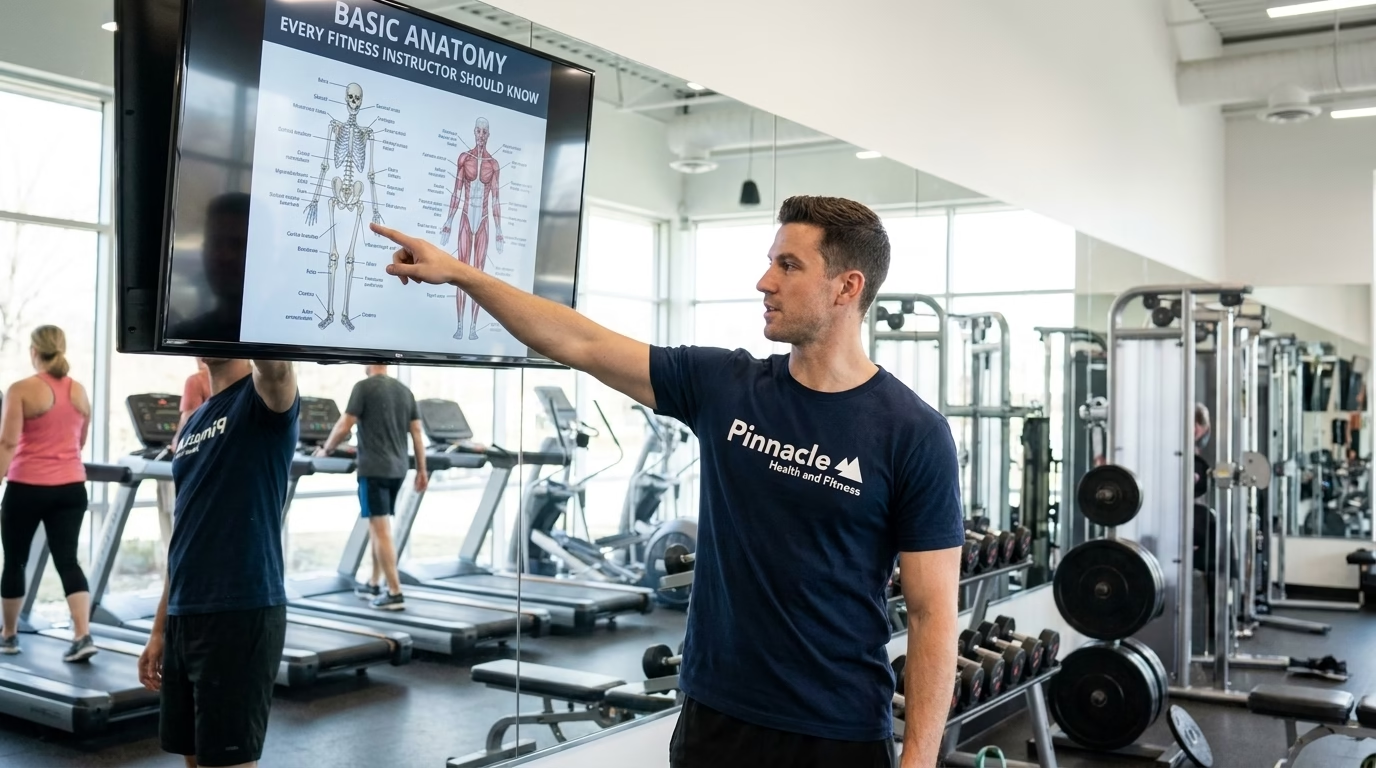
Before diving into qualifications, it helps to understand the role itself. A gym instructor is responsible for supervising the gym floor, conducting inductions for new members, demonstrating correct technique on equipment, designing basic exercise programmes, and ensuring the gym environment remains safe at all times.
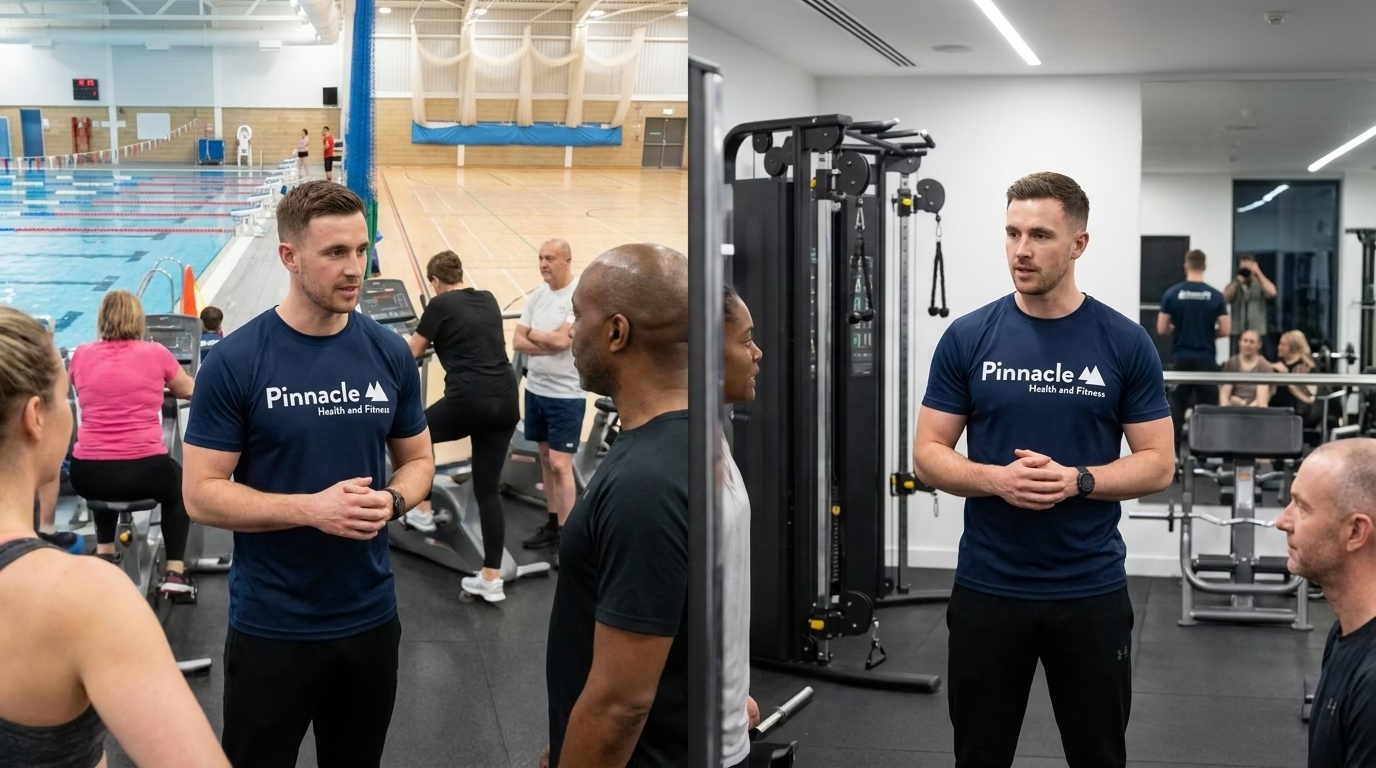
It is a role built on communication as much as it is on fitness knowledge. Gym instructors are often the first point of contact for nervous new members, and the ability to put someone at ease, explain things clearly, and build confidence is just as important as knowing how to set up a leg press correctly.
Step 2: Get the Right Qualification
This is the single most important step. To work as a gym instructor in the UK, you will need a recognised qualification, typically the Level 2 Gym Instructor course. This qualification covers anatomy and physiology, programme design, health and safety, customer service, and practical gym-floor competency, and it is the minimum requirement most gyms and leisure centres expect from candidates.
Always choose a course from an accredited awarding body, such as YMCA Awards, that maps to recognised national standards. At Pinnacle Health and Fitness, our Level 2 Gym Instructor course is awarded by YMCA Awards and mapped to CIMSPA professional standards, giving you a qualification that is genuinely recognised across the UK fitness industry, not just a certificate with no industry weight behind it.
We deliver this qualification through our blended 16-week model, combining online learning, live webinars, and hands-on practical workshops. Most learners complete the full qualification in around 16 weeks, but we understand every learner is different, so our delivery is flexible and adaptable to suit your personal schedule, experience, and pace.
Step 3: Build Practical Experience Alongside Your Qualification
Qualifications open the door, but practical confidence is what gets you through it. While studying with us, we encourage learners to spend time observing gym floors, shadowing experienced instructors where possible, and practising inductions, programme write-ups, and equipment demonstrations until they feel second nature.
Our practical workshops are designed specifically for this purpose. Rather than learning everything in theory and hoping it translates on the job, you will work through real gym-floor scenarios with guidance from our trainers, so that by the time you apply for roles, you already feel comfortable in the environment.
- Practise client inductions with different fitness levels and goals in mind
- Get comfortable explaining exercises clearly and correcting technique confidently
- Learn how to read a gym floor, prioritise tasks, and respond to member questions efficiently
- Build familiarity with common equipment brands and setups used across UK gyms
Step 4: Prepare a CV and Application That Stands Out
Your CV does not need to be long, but it does need to clearly communicate your qualification, any relevant experience (even informal, such as helping friends or family with their training), and your enthusiasm for the role. Many gyms also value candidates who demonstrate strong communication skills and a genuine interest in member wellbeing, not just technical fitness knowledge.
If you trained with Pinnacle Health and Fitness, mention your YMCA Awards qualification and CIMSPA-aligned training explicitly. Employers recognise these standards, and naming them shows you understand the industry’s professional framework rather than having completed a generic, unrecognised course.
- Keep your CV to one page where possible, with your qualification and contact details clearly visible
- Include a short personal statement explaining why you want to work in fitness
- List any first aid certification, as many employers require this alongside your gym instructor qualification
- Tailor your application to each gym, mentioning their specific facilities or member demographic where relevant
Step 5: Apply Strategically and Prepare for Interviews
Gym instructor roles are advertised across a wide range of channels, including individual gym websites, leisure centre job boards, national gym chain career pages, and general job sites. Independent gyms and boutique studios are often more open to newly qualified instructors than large chains, so do not overlook smaller operators in your area.
In interviews, expect to be asked about your qualification, how you would handle a new member induction, and how you would respond to common gym-floor situations, such as a member using equipment incorrectly or asking for advice outside your scope of practice. Confidence in these answers often comes directly from the practical experience built during training, which is exactly why our 16-week blended model places such strong emphasis on hands-on workshops.
Employers are increasingly looking for newly qualified instructors who can demonstrate confidence, professionalism, and strong communication skills on the gym floor from day one — qualities that are built through practical, real-world training rather than theory alone.
Step 6: Start Strong and Keep Learning
Your first few months as a gym instructor are about building confidence, learning the specific systems and culture of your workplace, and developing relationships with members. It is completely normal to feel uncertain in the early days, and most employers expect new instructors to need a settling-in period.
From here, your career path is entirely in your hands. Many of our learners use their Level 2 Gym Instructor qualification as the first step before progressing to our Level 3 Personal Trainer course, or our combined Level 2 and Level 3 Diploma, which allows you to study both qualifications together for a faster route into personal training.
The Pinnacle Career Journey
At Pinnacle Health and Fitness, we believe a fitness career is not a single qualification, but a journey. We support learners through every stage of that journey, from their very first step into the industry through to building a thriving client base of their own.
Start | Qualify | Progress | Specialise | Build a Client Base |
This Start, Qualify, Progress, Specialise, Build a Client Base framework underpins everything we do. For learners just beginning, this article focuses on the Start and Qualify stages: getting your first qualification and your first job.
From there, Progress typically means moving into personal training; Specialise involves choosing a focus area such as strength and conditioning or nutrition; and Build a Client Base is where you establish yourself as an independent professional or valued team member.
Looking ahead to 2026, we are expanding our course offering to support learners further along this journey, with new pathways in strength and conditioning and applied nutrition.
This means that wherever you are on your career journey, from taking your first step to specialising in a focus area, Pinnacle Health and Fitness will continue to be the partner that supports your long-term development, not just your entry-level qualification.
Ready to Take Your First Step? Our Level 2 Gym Instructor course is delivered through a flexible 16-week blended model of online learning, live webinars, and practical workshops, awarded by YMCA Awards and mapped to CIMSPA standards. Visit our website to find out more and start your journey with Pinnacle Health and Fitness. Explore the Level 2 Gym Instructor course at pinnaclehealthfitness.co.uk |
Frequently Asked Questions
Yes. To work as a gym instructor in the UK, you will need a recognised Level 2 Gym Instructor qualification. At Pinnacle Health and Fitness, our Level 2 Gym Instructor course is awarded by YMCA Awards and mapped to CIMSPA professional standards, giving you a qualification that is recognised by employers across the fitness industry.
Most learners complete our Level 2 Gym Instructor qualification in around 16 weeks through our blended delivery model of online learning, live webinars, and practical workshops. That said, we understand every learner is different, so our delivery is flexible and adaptable to suit your personal schedule, experience, and pace.
We don't offer a standalone personal training-only route. Instead, the UK-recognised progression is to complete your Level 2 Gym Instructor qualification first, followed by the Level 3 Personal Trainer course, or to study both together through our combined Level 2 and Level 3 Diploma. This ensures you build a strong foundation before progressing into personal training, in line with awarding-body expectations.
Most employers require gym instructors to hold a valid first aid qualification (such as Emergency First Aid at Work) alongside their Level 2 Gym Instructor certification. We can advise on how to fit this into your training plan during your time with us.
Throughout our 16-week blended programme, we combine online learning with live webinars and hands-on practical workshops, giving you both the flexibility to study around your existing commitments and the in-person support to build real gym-floor confidence. We are with you at every stage, from enrolment through to qualification and beyond.
Becoming a gym instructor is the Qualify stage of your career journey with us: Start, Qualify, Progress, Specialise, Build a Client Base. From here, most learners progress to our Level 3 Personal Trainer course, then specialise in an area such as strength and conditioning or applied nutrition (both launching as part of our expanded 2026 pathways), before building their own client base as an established fitness professional.
Not at all. Many learners enter their qualification without a fixed plan and make that decision once they understand their options more clearly. The important thing is to get your qualification right, through a properly accredited provider, so that both doors are open to you when you graduate. At Pinnacle Health and Fitness, our course advisers are happy to discuss career direction as part of your enrolment conversation.