If you are considering a career in fitness, one of the first questions you are likely to ask is a simple one: how much will I actually earn? It is a fair question, and the honest answer is that it depends on your qualification level, how you work, and how far you are willing to develop your skills over time.
At Pinnacle Health and Fitness, we support learners through every stage of the career journey — from taking their first qualification to building a sustainable, rewarding income in the fitness industry. In this guide, we break down what gym instructors and personal trainers can realistically expect to earn, what separates the two roles, and how the right qualification changes everything.
Understanding the Two Roles
What Does a Gym Instructor Do?
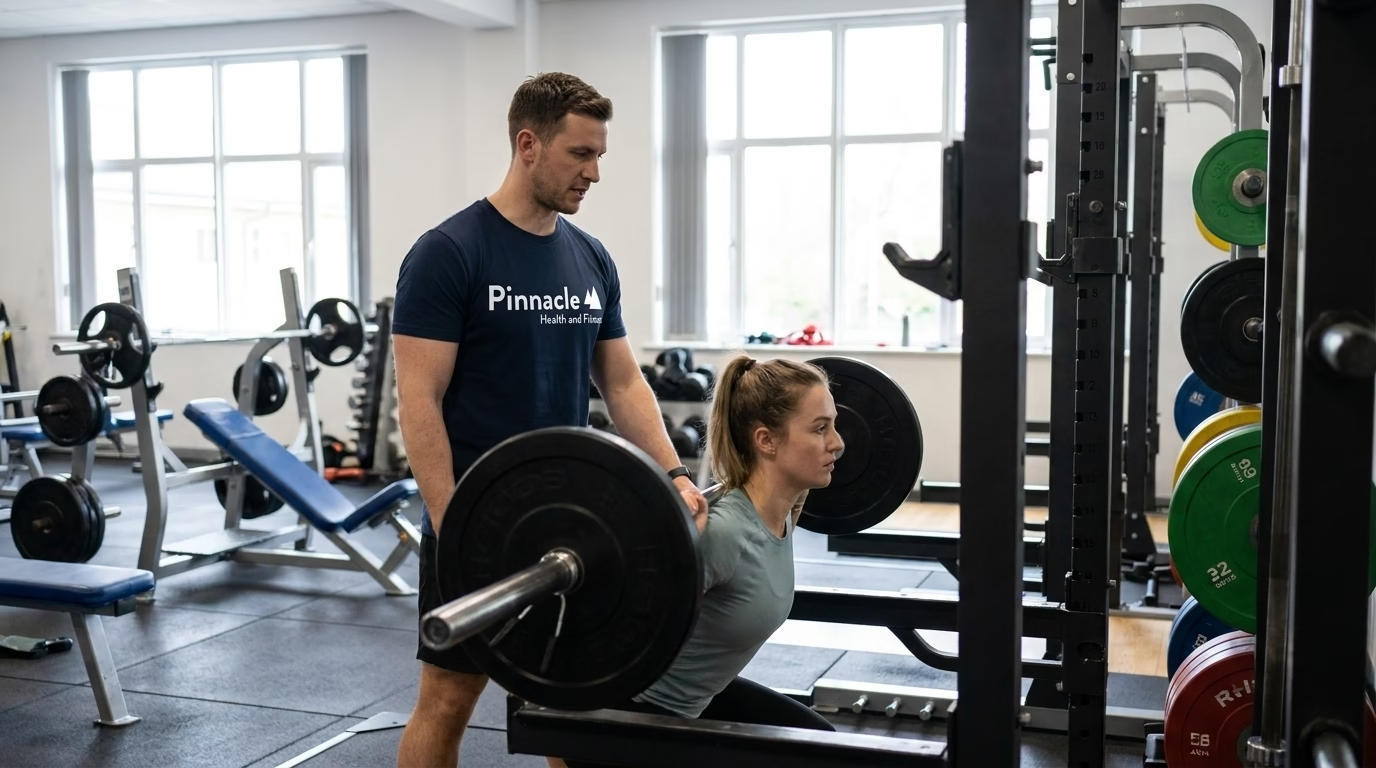
A gym instructor works on the gym floor. Their day-to-day responsibilities include inductions for new members, guiding clients through safe and effective use of gym equipment, delivering group exercise support, and maintaining a motivating environment on the floor.
To work legally as a gym instructor in the UK, you need the Level 2 Gym Instructor qualification. At Pinnacle Health and Fitness, our Level 2 Diploma in Gym Instruction is accredited by YMCA Awards and mapped to CIMSPA standards — meaning your qualification is recognised and respected by employers across the industry. This is the starting point of the Start → Qualify → Progress → Specialise → Build a Client Base career framework we champion for every learner.
What Does a Personal Trainer Do?
A personal trainer works directly with individual clients to design bespoke training programmes, offer nutritional guidance (within scope of practice), deliver one-to-one coaching sessions, and support clients in achieving specific health and fitness goals.
The role requires a higher level of knowledge and a higher-level qualification. At Pinnacle Health and Fitness, that means completing the Level 3 Personal Trainer pathway — either through our Level 3 Diploma in Personal Training or our fast-track Combined Level 2 and Level 3 Diploma, which takes you from first qualification to fully practising PT in a single programme.
Gym Instructor Salary: What to Expect
Let us start with the numbers most people want to know.
As an employed gym instructor in the UK, you can typically expect to earn between £18,000 and £24,000 per year in a full-time employed role. Entry-level positions in budget gym chains often sit at the lower end of that range, while fitness facilities that prioritise service quality tend to offer more competitive starting salaries.
For gym instructors who move into self-employed or freelance work — running group sessions, providing floor supervision for multiple facilities, or combining roles — annual income can increase to £25,000–£35,000 with the right client base and timetable.
💡 Key insight: Your Level 2 Gym Instructor qualification opens the door. But income grows most significantly when you progress to Level 3 or add specialist certifications.
It is also worth noting that many gym instructors use the role as a launchpad. The floor experience you gain as a Level 2 qualified instructor is invaluable preparation for the practical demands of personal training — which is exactly why we encourage learners at Pinnacle Health and Fitness to treat the gym instructor stage as step one of a longer journey.
Personal Trainer Salary: The Earning Potential
This is where the numbers become considerably more interesting.
An employed personal trainer working in a mid-to-large gym or fitness centre can expect a starting salary of around £25,000 to £30,000. For trainers who establish a strong reputation within a club — particularly those who offer semi-private sessions or progress into management — salaries of £35,000 or above are achievable within a few years.
Self-employed personal trainers have the highest earning potential of all fitness professionals at the foundational level. A PT charging £40–£60 per session who maintains a full weekly client schedule of 25–30 paid sessions can earn £50,000 or more annually. Many of our Pinnacle Health and Fitness graduates who have gone on to build successful private practices report income well above this threshold once they are established.
The ceiling is not fixed. Online coaching, group PT, corporate wellness contracts, and subscription programmes have allowed a growing number of qualified PTs to earn £70,000–£100,000+ — though this typically requires specialist knowledge, strong brand positioning, and years of consistent client building.
UK Fitness Industry Salary Overview (2025–2026 Estimates)
| Role | Employed (Annual) | Self-Employed (Potential) | With Specialisation |
|---|---|---|---|
| Gym Instructor (Level 2) | £18,000 – £24,000 | £20,000 – £30,000 | £25,000 – £35,000+ |
| Personal Trainer (Level 3) | £25,000 – £35,000 | £30,000 – £50,000+ | £45,000 – £70,000+ |
| Combined Diploma Graduate | £22,000 – £30,000 | £35,000 – £60,000+ | £50,000 – £80,000+ |
*Salary figures are indicative estimates based on UK industry data and may vary by location, experience, and employment model.
What Makes the Difference? Qualification Level and Delivery Quality
Earnings in fitness are rarely determined by qualification alone — but the right qualification from a credible provider is the foundation everything else is built on.
At Pinnacle Health and Fitness, all of our courses are accredited by YMCA Awards and mapped to CIMSPA professional standards. YMCA Awards is the UK's leading awarding body for fitness qualifications, and CIMSPA is the professional standards body for the fitness and coaching sector. Together, they ensure that what our learners achieve is recognised by employers, insurers, and professional bodies across the country.
We deliver our qualifications through a structured blended learning model: online theory modules that fit around your schedule, weekly live webinars for real-time tutor interaction, and hands-on practical workshops where you develop the coaching skills that no online video can replace.
Most learners complete the full qualification in around 16 weeks, but we understand every learner is different, so our delivery is flexible and adaptable to suit your personal schedule, experience, and pace.
This matters for earnings because employers and clients notice the difference between a qualified fitness professional who has been genuinely trained and assessed, and someone who completed a tick-box online course. The YMCA Awards accreditation and CIMSPA alignment that sits behind a Pinnacle Health and Fitness qualification is not a formality — it is a mark of genuine industry credibility.
The Career Journey: Start → Qualify → Progress → Specialise → Build a Client Base
Whether you begin at Level 2 or take the combined diploma route, the career trajectory in fitness follows a clear arc:
- Start: Build your understanding of anatomy, physiology, exercise science, and safe coaching practice.
- Qualify: Earn your YMCA Awards-accredited Level 2 Gym Instructor or Level 3 Personal Trainer qualification through Pinnacle Health and Fitness.
- Progress: Move from employed gym floor work into personal training, building client relationships and income as you go.
- Specialise: Add advanced skills — strength and conditioning, nutrition coaching, rehabilitation, or a niche population focus — to differentiate yourself and command higher rates.
- Build a Client Base: Develop a sustainable income through a mix of employed hours, private clients, group programmes, or online coaching.
For learners interested in moving quickly through this journey, our Combined Level 2 and Level 3 Diploma is the most efficient pathway. It takes you from entry level to fully qualified PT in a single blended programme, without the wait between qualifications.
Location, Employment Model, and Specialisation: The Variables That Shape Your Income
Three variables consistently separate high earners from average earners in the fitness industry.
Location
Fitness professionals in London and the South East tend to earn significantly more than those working in other regions, reflecting both higher session rates and higher cost of living. That said, the growth of online coaching has reduced geographic barriers considerably — a Level 3 qualified PT based in Manchester or Leeds can now build a client base that extends well beyond their local area.
Employment vs Self-Employment
Employed gym instructors and personal trainers trade income ceiling for stability and benefits. Self-employed fitness professionals have the potential to earn significantly more, but must manage their own insurance, tax, client acquisition, and scheduling. Neither model is inherently better — the right fit depends on your risk appetite, lifestyle, and long-term goals.
Specialisation
This is where earning potential accelerates most sharply. A general personal trainer competing in a crowded market will always face more pricing pressure than a PT who specialises in pre- and post-natal fitness, senior strength and conditioning, or athletic performance. Specialisation takes time — but it consistently produces the highest long-term income.
At Pinnacle Health and Fitness, we are expanding our course offering in 2026 to include pathways in Strength and Conditioning and Applied Nutrition, positioning us as a provider for the full career arc — not just the entry-level qualification.
Choosing the Right Qualification Provider
Not all fitness qualifications carry the same weight. When choosing a course, look for accreditation from a recognised awarding body — such as YMCA Awards — and ensure the qualification is mapped to national standards, including CIMSPA professional standards. Avoid any provider that cannot clearly answer those two questions.
Also consider delivery quality. A blended learning model — combining online theory, live tutor contact, and practical assessment — is the gold standard for fitness education. It gives you the flexibility of online study without sacrificing the hands-on coaching development that the role demands.
At Pinnacle Health and Fitness, we have built our entire curriculum around this principle. Our tutors are experienced fitness professionals who bring real-world expertise into every webinar and workshop. Our assessments are rigorous because we want our graduates to be genuinely job-ready, not just paperwork-qualified.
Ready to Start Your Fitness Career?
Whether you are just starting out or looking to progress from gym instructor to personal trainer, Pinnacle Health and Fitness has a qualification pathway built around your goals. Explore our Level 2 Gym Instructor, Level 3 Personal Trainer, and Combined Level 2 and Level 3 Diploma courses, and take the first step toward a career — and income — you are genuinely proud of.
Frequently Asked Questions
Employed personal trainers earn between £25,000 and £35,000 on average. Self-employed PTs with an established client base can earn £40,000–£70,000 or more, depending on session rates, specialisation, and business model.