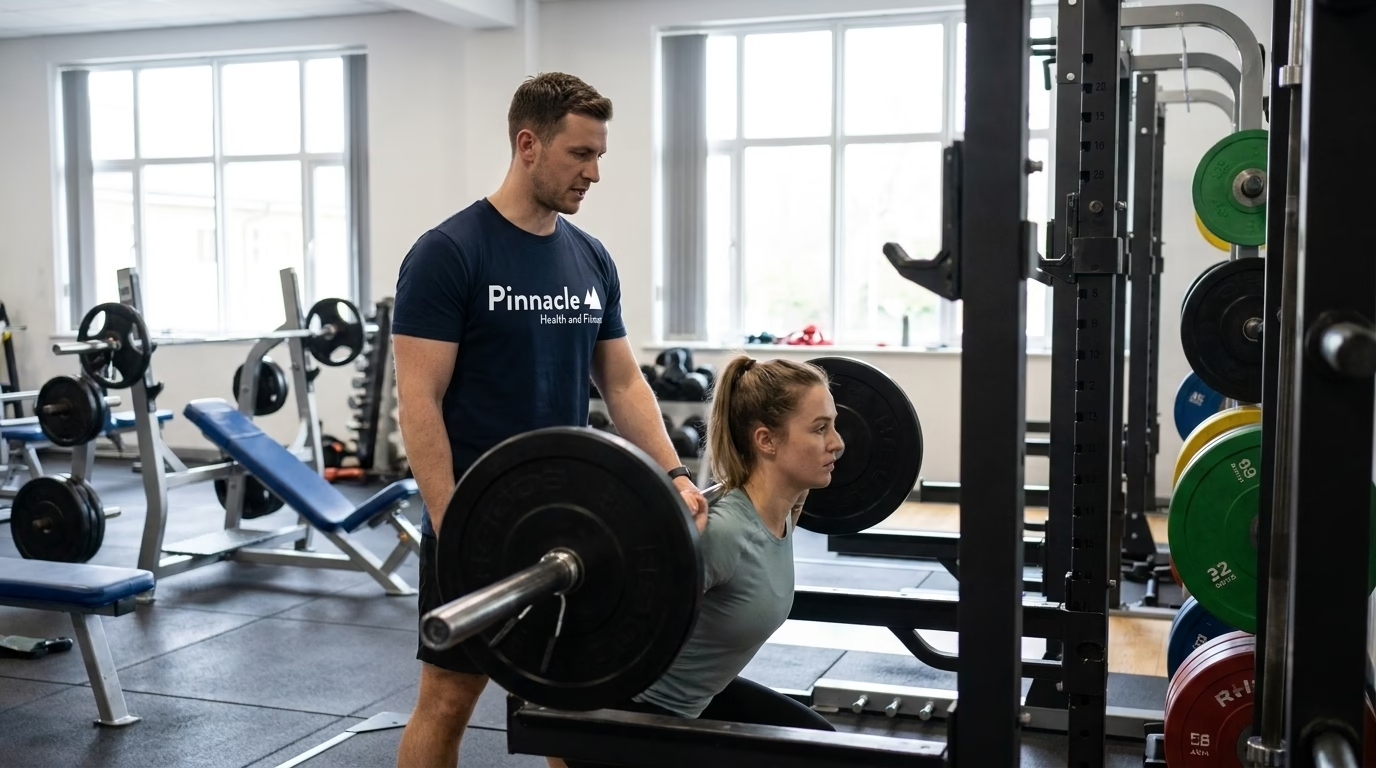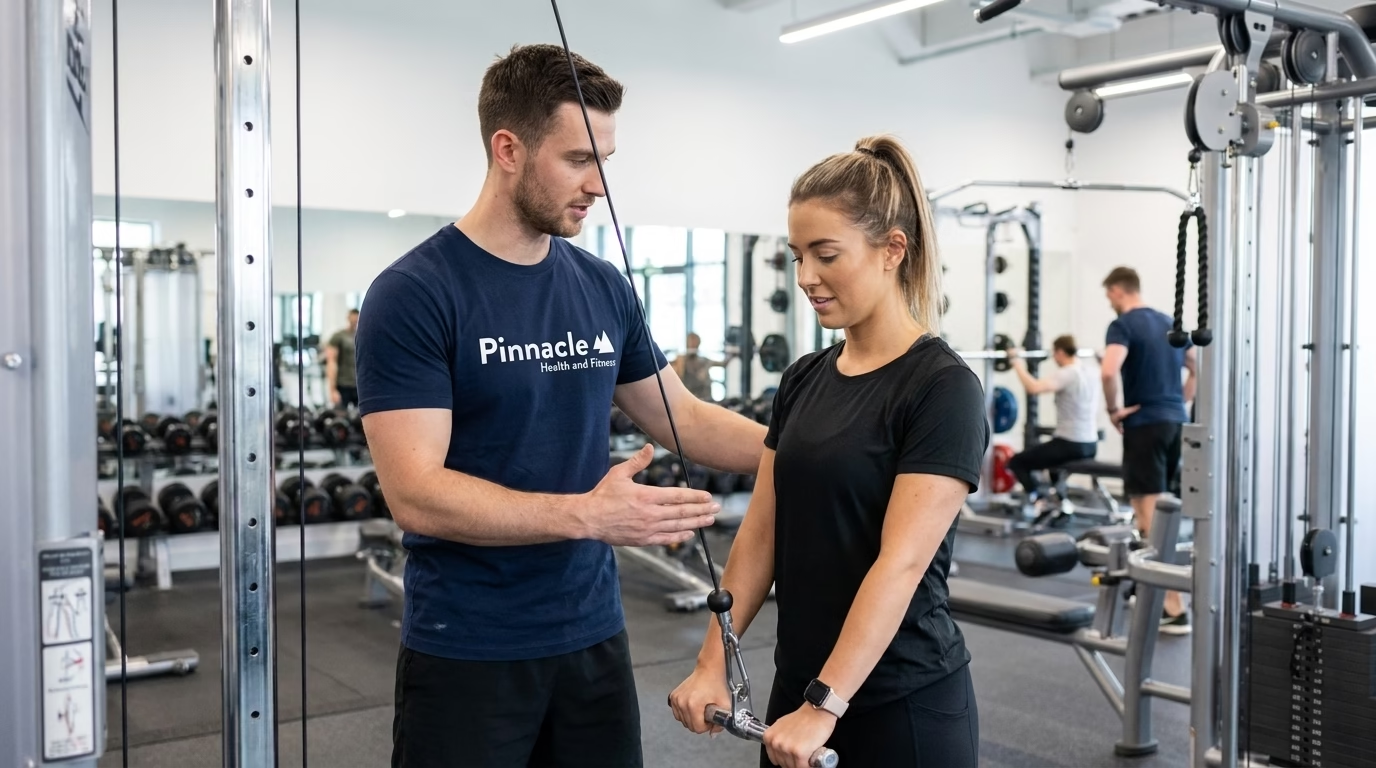
If you are already working as a gym instructor, you have already done the hardest part: you are in the industry, building experience, and learning what it takes to support members day to day.
The natural next step for many instructors is to progress into personal training, where you move from supervising the gym floor to building dedicated, one-to-one client relationships and designing programmes tailored to individual goals.
If you have not yet completed your Level 2 qualification, our earlier guide on how to get your first job as a gym instructor is the right place to start before returning to this one. This guide focuses on what changes when you move from instructing to training, what you need to prepare, and how to make the transition smoothly.
Why Make the Move From Gym Instructor to Personal Trainer?
Gym instructing gives you a strong foundation: confidence on the gym floor, familiarity with equipment, and experience interacting with a wide range of members. Personal training builds directly on that foundation, but shifts the focus from general supervision to individualised support.
For many instructors, the appeal of personal training comes down to a few key factors. You get to build longer-term relationships with clients and see their progress over weeks and months, rather than brief gym-floor interactions.
You gain the ability to design and adapt programmes specifically for each person's goals, whether that is weight loss, strength building, rehabilitation, or sport-specific performance. And you open up a more flexible earning structure, often combining employed hours with self-employed client work.
What Changes Between Level 2 and Level 3?
It helps to understand exactly what separates the two roles before committing to the next stage of training. The table below outlines the key differences between working as a gym instructor and working as a personal trainer.
| Area | Gym Instructor (Level 2) | Personal Trainer (Level 3) |
|---|---|---|
| Scope of Practice | Supervises gym floor, conducts inductions, demonstrates equipment use | Designs personalised programmes, delivers one-to-one training and small-group training where appropriate |
| Client Relationship | Brief, gym-floor interactions with members | Ongoing, structured relationships built around individual goals |
| Earning Structure | Typically salaried, often part of a leisure centre or gym team | Can combine salaried hours with self-employed client work |
| Specialisms Available | General gym supervision and basic programming | Open pathway into strength and conditioning, applied nutrition, and niche client populations |
This is why the Level 3 Personal Trainer qualification exists as a distinct step rather than simply an extension of Level 2. It introduces deeper anatomy and physiology, programme periodisation, client assessment and screening, behaviour change techniques, and the business skills needed to manage your own client base.
The Qualification Route: Level 3 Personal Trainer
At Pinnacle Health and Fitness, our Level 3 Personal Trainer course is awarded by YMCA Awards and mapped to CIMSPA professional standards. This means the qualification is recognised across the UK fitness industry, whether you plan to work within a gym as an employed personal trainer or build an independent client base of your own.
Most learners complete the full qualification in around 16 weeks, but we understand every learner is different, so our delivery is flexible and adaptable to suit your personal schedule, experience, and pace, particularly important for instructors who are studying while continuing to work.
If you have not yet completed your Level 2 Gym Instructor qualification, you do not need to complete it separately before starting Level 3. We also offer a combined Level 2 and Level 3 Diploma, which allows new learners to study both qualifications together as a single, structured pathway into personal training.
Skills to Build Before and During Your Transition
Beyond the formal qualification, there are practical skills worth developing as you prepare to move into personal training. Building these alongside your Level 3 studies will make your transition smoother and your early client sessions more confident.
1. Client Assessment and Goal Setting
Personal training begins with understanding where a client is starting from and where they want to go. Practise conducting structured consultations, setting realistic goals, and identifying any health considerations that may affect programme design. Our Level 3 course covers this in depth, including how to carry out screening and assessments confidently.
2. Programme Design for Individuals
As a gym instructor, you may have designed general programmes for a range of members. As a personal trainer, programme design becomes far more individualised, accounting for a client's specific goals, training history, lifestyle, and progression over time. This is one of the most significant skill shifts between the two roles.
3. Communication and Behaviour Change
Helping clients build sustainable habits often matters as much as the programme itself. Personal trainers need to be able to motivate, support, and sometimes challenge clients in a way that encourages long-term adherence. Our Level 3 course includes behaviour change techniques to help you support clients beyond the gym floor.
4. Business Basics, If You Plan to Go Self-Employed
If part of your plan includes self-employed client work alongside or instead of employed hours, it is worth starting to think early about how you will manage bookings, pricing, and client communication. While this is not the focus of the qualification itself, our team is always happy to discuss how other learners have approached this as part of their own transition.
Making the Move: A Practical Transition Plan
Transitioning from gym instructor to personal trainer does not need to mean stepping away from your current role straight away. Many of our learners study for their Level 3 qualification while continuing to work as gym instructors, gradually building personal training hours alongside their existing responsibilities.
- Speak to your current employer about whether they offer personal training sessions or floor space for personal trainers
- Use your existing gym-floor relationships, members you have already supported as an instructor are often open to booking sessions with someone they already trust
- Start building a small portfolio of client results, even informally, to use in future applications or marketing
- Use your 16-week study period to gradually shift your mindset from supervising the floor to managing individual client relationships
The Pinnacle Career Journey
At Pinnacle Health and Fitness, we support learners through every stage of their career: Start, Qualify, Progress, Specialise, Build a Client Base. Moving from gym instructor to personal trainer sits at the heart of this framework, representing the Progress stage of your journey with us.
Having completed Start and Qualify through your Level 2 Gym Instructor qualification (see our guide on getting your first job as a gym instructor if you are earlier in this journey), the Level 3 Personal Trainer course represents your Progress stage. From here, the next stages, Specialise and Build a Client Base, open up a wide range of directions depending on your interests and goals.
Looking ahead to 2026, we are expanding our course offering with new pathways in Strength and Conditioning and Applied Nutrition. These specialisms will sit naturally after your Level 3 qualification, allowing you to develop a focused area of expertise and stand out to clients looking for trainers with specific knowledge, whether that is performance-based training or evidence-based nutritional guidance.
Ready to Progress to Personal Training?
Our Level 3 Personal Trainer course is delivered through a flexible 16-week blended model of online learning, live webinars, and practical workshops, awarded by YMCA Awards and mapped to CIMSPA standards. Visit our website to find out more and take the next step with Pinnacle Health and Fitness.
Explore the Level 3 Personal Trainer course at pinnaclehealthfitness.co.ukFrequently Asked Questions
Completing the Level 2 Gym Instructor qualification first is the UK-recognised progression route, and most personal trainers begin this way. However, if you are new to the industry and confident about your direction, we also offer a combined Level 2 and Level 3 Diploma, which allows you to study both qualifications together as a single pathway.