When most people think about becoming a fitness professional, they picture programming sessions, coaching technique, and helping clients reach their goals. And rightly so. But there is a dimension of this career that is just as important and far less talked about: safeguarding.
At Pinnacle Health and Fitness, we believe safeguarding is not a box-ticking exercise. It is a fundamental part of what it means to be a trusted, competent fitness professional in the UK today. Whether you are working as a gym instructor on a busy gym floor or building a one-to-one personal training client base, the responsibility to keep the people in your care safe is ever-present.
This guide walks you through what safeguarding means in a fitness context, why it matters, what the law expects of you, and how your qualifications from Pinnacle Health and Fitness equip you to meet those responsibilities with confidence.
What Does Safeguarding Actually Mean in Fitness?
Safeguarding is broadly defined as the action taken to promote the welfare of individuals and protect them from harm, abuse, or neglect. In a healthcare or social care setting, this language is familiar. In fitness, it is increasingly recognised as equally important.
As a fitness professional, you may work with a wide range of people, including children, older adults, individuals with health conditions, people experiencing mental health difficulties, and those who may be vulnerable due to personal circumstances. In each of these scenarios, you hold a position of trust and relative authority. Clients look to you for guidance, support, and expertise.
That position of trust brings legal and ethical obligations. Safeguarding in fitness means being able to:
- Recognise when a client may be at risk of harm or abuse
- Understand the boundaries of your professional role
- Know how and when to refer or escalate concerns
- Create a safe, inclusive, and non-discriminatory environment
- Protect client confidentiality while also knowing when disclosure is necessary
These are not vague ideals. They are real-world competencies that Pinnacle Health and Fitness builds into its qualifications from day one.
Why Safeguarding Is Non-Negotiable in the Fitness Industry
The UK fitness sector is governed by a growing body of professional standards, largely shaped by CIMSPA (the Chartered Institute for the Management of Sport and Physical Activity), the professional body that sets the benchmark for what competent, ethical fitness practice looks like.
CIMSPA’s professional standards make clear that safeguarding awareness is expected of all registered fitness professionals, not just those working with children or clinical populations. It applies across the board.
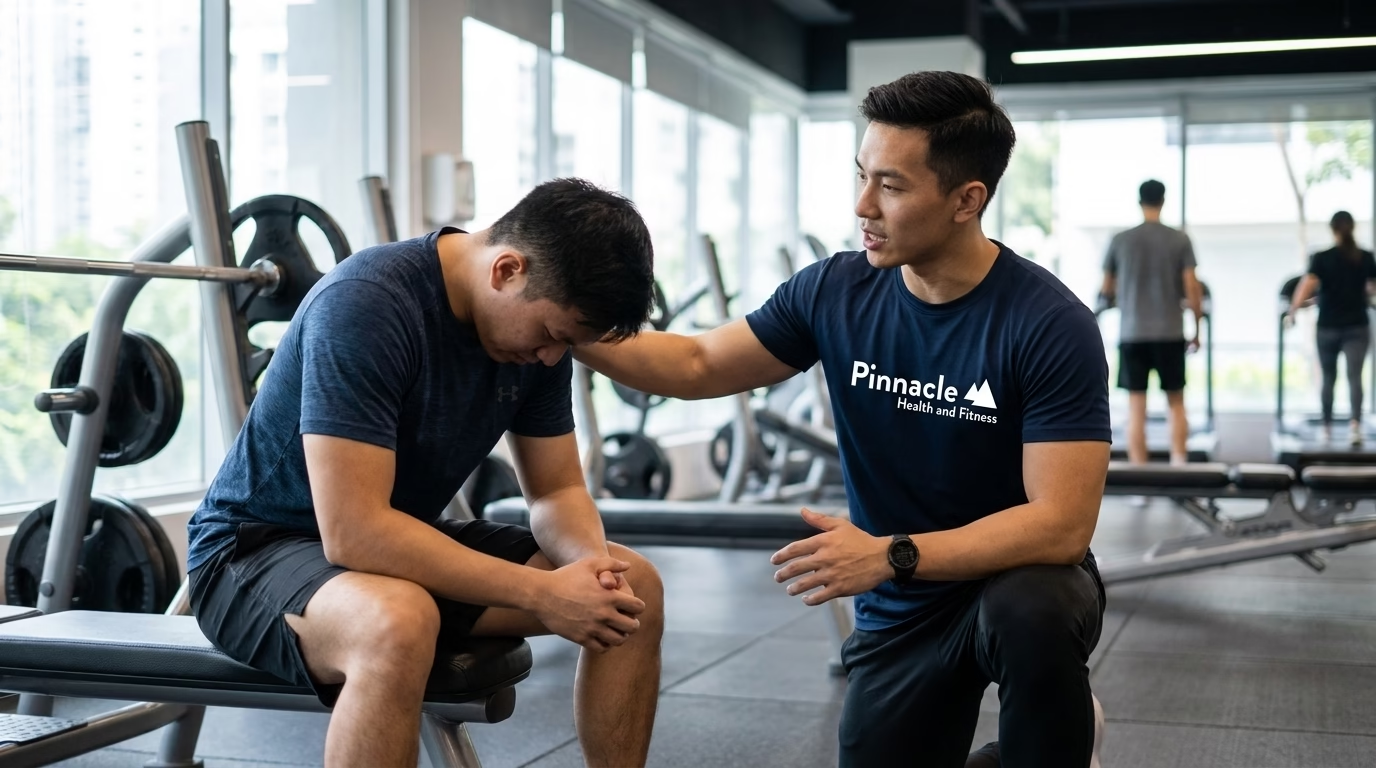
There is also a practical dimension. Fitness professionals regularly encounter clients in emotionally vulnerable states. A client working through grief, anxiety, or recovery from illness is often using exercise as a coping mechanism. They may share information that reveals risk. If you are not equipped to respond appropriately, the consequences can be serious.
Safeguarding is not a specialist add-on. It is a core professional competency every qualified fitness instructor should carry into every session.
The reputational and legal implications of getting this wrong are significant. Professionals who fail to act on safeguarding concerns, breach client confidentiality inappropriately, or overstep professional boundaries may face disciplinary action through CIMSPA’s conduct framework. In some cases, legal liability may follow.
Legal Framework: What the Law Says
Fitness professionals in the UK are not regulated by statute in the same way as healthcare professionals, but they are still subject to a range of legal obligations that intersect with safeguarding.
The Children Act 1989 and 2004
If you work with under-18s, whether in school sports programmes, youth fitness sessions, or sports clubs, you have a legal duty to act in the best interests of the child. The Children Act 2004 introduced the framework for multi-agency safeguarding, requiring anyone working with children to contribute to early identification of risk and to share concerns with appropriate authorities.
The Care Act 2014
The Care Act extended equivalent protections to adults at risk. An adult at risk is broadly defined as a person who has care and support needs, is experiencing, or is at risk of, abuse or neglect, and is unable to protect themselves because of those needs. This definition can apply in a fitness context more often than professionals realise.
GDPR and Data Protection Act 2018
Safeguarding and data protection are closely linked. Client health information, session notes, and any disclosures must be handled in line with GDPR principles. However, GDPR also recognises that the right to confidentiality is not absolute. Where there is a serious risk to life, disclosure to appropriate authorities without consent may be both legally permitted and professionally required.
Duty of Care
In the UK, anyone who takes on a professional role in relation to others has a common law duty of care. For fitness professionals, this duty encompasses not only physical safety during exercise but also the broader obligation to act reasonably when signs of harm or risk become apparent.
Safeguarding in Practice: What It Looks Like on the Gym Floor
Safeguarding is not only about dramatic disclosures or obvious signs of abuse. Much of it is quiet, everyday professional practice. Here is what that looks like in reality:
Maintaining Appropriate Boundaries
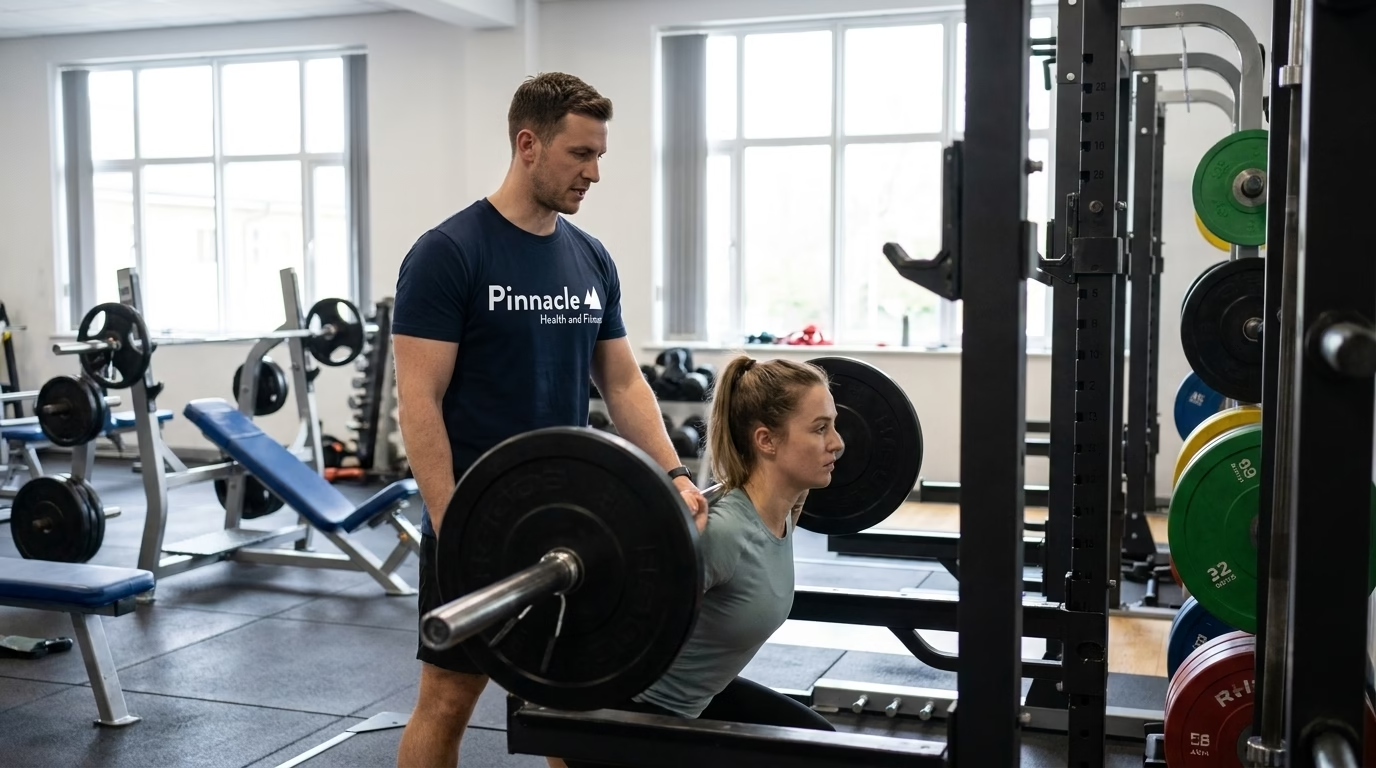
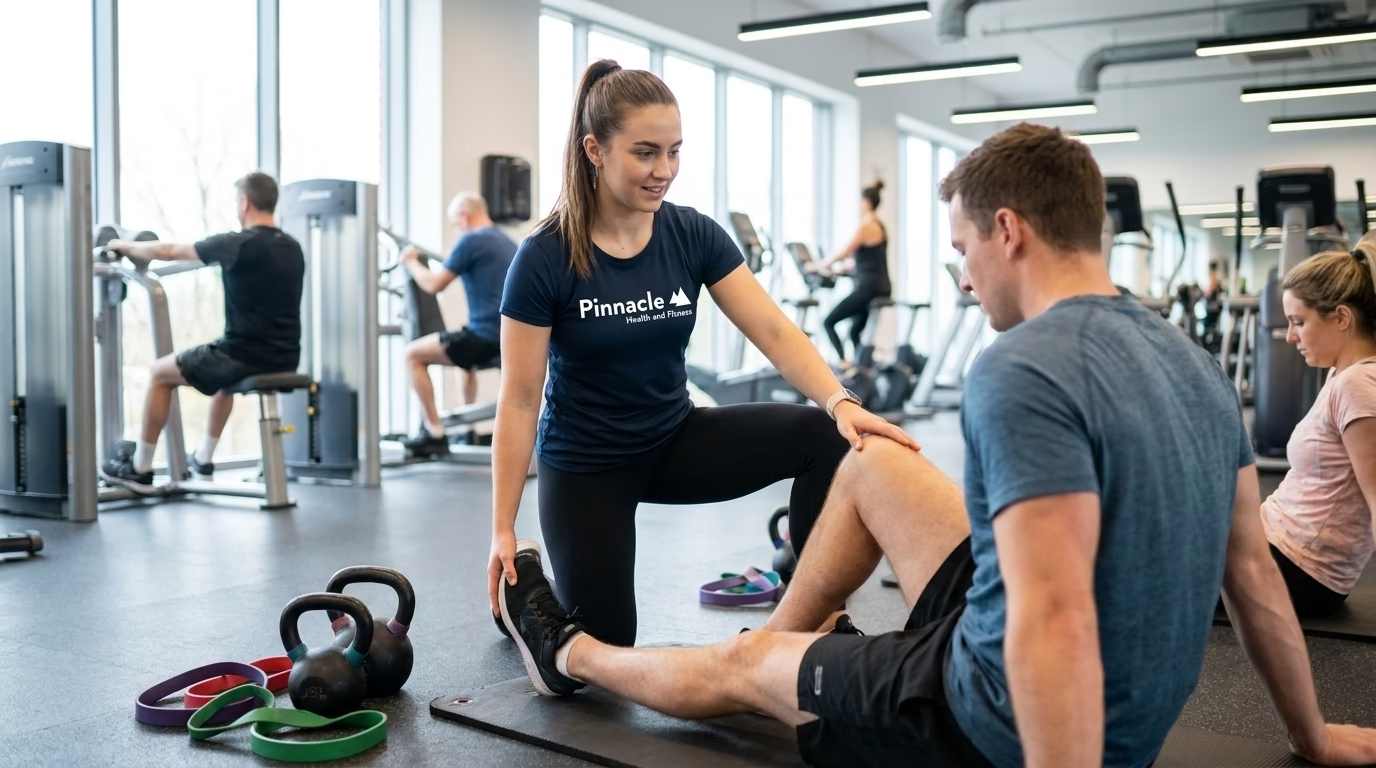
The relationship between a fitness professional and client is built on trust, but that trust must operate within clear professional limits. This means not sharing personal contact details outside of the professional context, avoiding dual relationships that blur the professional-client line, and being mindful of physical contact protocols, particularly when demonstrating technique or correcting posture.
Recognising Potential Signs of Concern
Fitness professionals are often in a unique position because regular sessions mean they notice changes over time. Unexplained bruising, sudden weight loss, withdrawal from previously enjoyed activities, disclosures made in passing, or signs of extreme stress or distress are all potential indicators that a client may need additional support or that safeguarding concerns need to be raised.
Responding Appropriately
If a concern arises, the response must be measured and proportionate. You should listen calmly without probing for detail, record what you have observed or been told accurately and objectively, and follow your employer or facility's safeguarding policy. If you are self-employed, you should have a personal safeguarding protocol in place. You should never promise confidentiality in situations where disclosure may be necessary.
Inclusive and Non-Discriminatory Practice
Safeguarding is also proactively about creating environments where all clients feel safe. This means using inclusive language, being alert to cultural sensitivities, not making assumptions about ability or identity, and ensuring that your programming and communication do not inadvertently marginalise or stigmatise any group.
How Pinnacle Health and Fitness Integrates Safeguarding Into Your Qualification
At Pinnacle Health and Fitness, safeguarding is woven through the curriculum from the beginning of your learning journey. Our qualifications are accredited by YMCA Awards and mapped to CIMSPA professional standards, which means safeguarding competencies are built directly into the qualification framework, not treated as optional extras.
Our blended learning model, delivered over approximately 16 weeks through online modules, live webinars, and practical workshops, gives you the time and space to develop these competencies properly. You do not just read a policy and tick a box. You work through real-world scenarios, discuss case studies in webinar sessions, and demonstrate professional conduct in your practical assessments.
Level 2 Gym Instructor
Our Level 2 Diploma in Gym Instruction introduces the foundational professional values that underpin safe and ethical practice, including awareness of safeguarding principles and appropriate professional boundaries. This is the Start of your career journey: Start → Qualify → Progress → Specialise → Build a Client Base.
Level 3 Personal Trainer
Our Level 3 Diploma in Personal Training builds on this, requiring a deeper understanding of duty of care, client welfare, professional conduct, and the legal responsibilities that come with designing and delivering personalised programmes. At this stage in your progression, safeguarding is contextualised within the complexity of one-to-one coaching relationships.
Combined Level 2 and Level 3 Diploma
Our Diploma in Fitness Instructing and Personal Training takes you through both levels in a single structured pathway, giving you the most comprehensive grounding in professional practice, including safeguarding, available at entry and intermediate level.
Always choose a course from an accredited awarding body, such as YMCA Awards, that maps to national standards. This ensures your safeguarding training carries professional weight.
Self-Employed Fitness Professionals: Additional Responsibilities
If you plan to operate as a self-employed personal trainer, your safeguarding responsibilities are broadly the same as an employed professional, but you carry more of the administrative and structural burden yourself.
This means you need to have your own safeguarding policy in place from the start. It should set out how you will respond to concerns about vulnerable adults or children, how you will record and store client information securely, and who you will contact if you need to escalate a concern.
As a sole trader, you do not have an HR team or a line manager. You are the first and last line of professional response.
You should also ensure you hold an appropriate DBS (Disclosure and Barring Service) check if your work brings you into contact with children or vulnerable adults. Many commercial gyms and schools will require this as a condition of engagement, but it is best practice regardless.
Professional indemnity insurance is essential. A reputable policy should include cover that acknowledges your duty of care obligations. Membership of a professional body, ideally through CIMSPA registration, further signals to clients and employers that you operate to recognised standards.
Mental Health Awareness as Part of Safeguarding
Mental health is one of the most significant areas where fitness professionals may encounter safeguarding situations. Research consistently shows that exercise has a positive impact on mental wellbeing, which means clients with depression, anxiety, or other mental health conditions often actively seek support from fitness professionals.
This is a privilege and a responsibility in equal measure. As a fitness professional, you are not a mental health practitioner. Your role is not to diagnose or treat, but you do need to be equipped to listen, to recognise when a client may need professional mental health support, and to signpost effectively without crossing the boundary into counselling.
The ability to have a calm, professional conversation with a client who discloses personal distress is a skill. It requires emotional intelligence, knowledge of appropriate referral pathways, and confidence in your professional limits.
At Pinnacle Health and Fitness, our programmes prepare you for this through scenario-based learning and tutor-led discussion, so you arrive at these conversations feeling ready, not caught off guard.
Working With Children and Young People
If your ambition includes working with young people, whether in youth fitness, schools, sports clubs, or community programmes, your safeguarding obligations become more specific and more demanding.
You will need to complete formal safeguarding training, typically a Level 1 or Level 2 award in Safeguarding and Protecting Children, in addition to your fitness qualification. You should also have a current DBS check at enhanced level.
The organisation you work with will normally have a designated safeguarding lead (DSL), and you will need to understand your responsibilities in relation to that person.
It is worth noting that the way you communicate with young people, the language you use, the boundaries you maintain, and the way you respond to disclosures, differs from adult coaching in important ways. Consent, appropriate physical contact, social media communication, and session delivery all require additional care and awareness.
Building a Safeguarding Culture as a Career Value
One of the things that distinguishes a good fitness professional from a great one is the capacity to build genuine trust with clients. Safeguarding is not separate from that. It is part of it.
When clients feel safe with you, not just physically but emotionally and professionally, they are more likely to be honest about their health history, their goals, and their struggles. That honesty makes your coaching more effective. It also means they are more likely to refer others to you, to stay with you long term, and to recommend you without hesitation.
The career framework we teach at Pinnacle Health and Fitness, Start → Qualify → Progress → Specialise → Build a Client Base, is underpinned throughout by professional values. Safeguarding is not something you learn once and move on from. It is a standard that grows with your practice.
Looking ahead, Pinnacle Health and Fitness will be expanding into Strength and Conditioning and Applied Nutrition. These specialist pathways will carry the same commitment to professional values, safeguarding awareness, and CIMSPA-aligned practice that characterises everything we currently deliver.
Ready to Build Your Career on a Foundation of Professional Excellence?
At Pinnacle Health and Fitness, we prepare you not just to pass a qualification, but to enter the fitness industry as a confident, competent, and ethically grounded professional. Our YMCA Awards-accredited programmes, delivered through our 16-week blended model, ensure safeguarding is embedded in everything you learn, from your very first session to your final practical assessment.
Visit pinnaclehealthfitness.co.uk to explore our course pathways, download a prospectus, or speak with a Careers Advisor about the right starting point for you.
Frequently Asked Questions
Yes. Safeguarding principles are embedded throughout our accredited programmes. Our qualifications are awarded by YMCA Awards and mapped to CIMSPA professional standards, both of which include safeguarding competencies as part of the core curriculum.
A DBS check is legally required if you work with children or vulnerable adults. Even where it is not strictly required by law, many employers and facilities expect it as standard. We advise all learners to arrange an appropriate DBS check as part of their preparation to enter the workforce.
Listen calmly, do not probe for additional detail, and document what you have observed or been told as accurately as possible. Follow your employer's safeguarding policy or, if you are self-employed, your own written protocol. You should never promise confidentiality in situations where a disclosure may require escalation.
Yes. Safeguarding applies across all fitness settings, regardless of client profile. Adults can be at risk in ways that are not immediately obvious, and all fitness professionals have a duty of care. CIMSPA professional standards reflect this.
Our blended delivery model combines online learning, live webinars, and practical workshops. Safeguarding is introduced in the online modules, explored through real-world scenarios in webinar discussions, and demonstrated in your practical assessments. Most learners complete the full qualification in around 16 weeks, though our delivery is flexible to suit different schedules and experience levels.