What to expect, how to navigate it, and how to build a career that actually lasts.
The 90-day mark is where careers are made or abandoned
Starting your career in fitness is one of the most energising decisions you can make. New environment, new clients, real impact.
But we’d be doing you a disservice if we didn’t also acknowledge the other side of it: the moments of uncertainty, the slow start, and the occasional “what have I just committed to?”
Your first 90 days aren’t about being perfect. They’re about building the confidence, habits, and professional instincts that will underpin everything that follows.
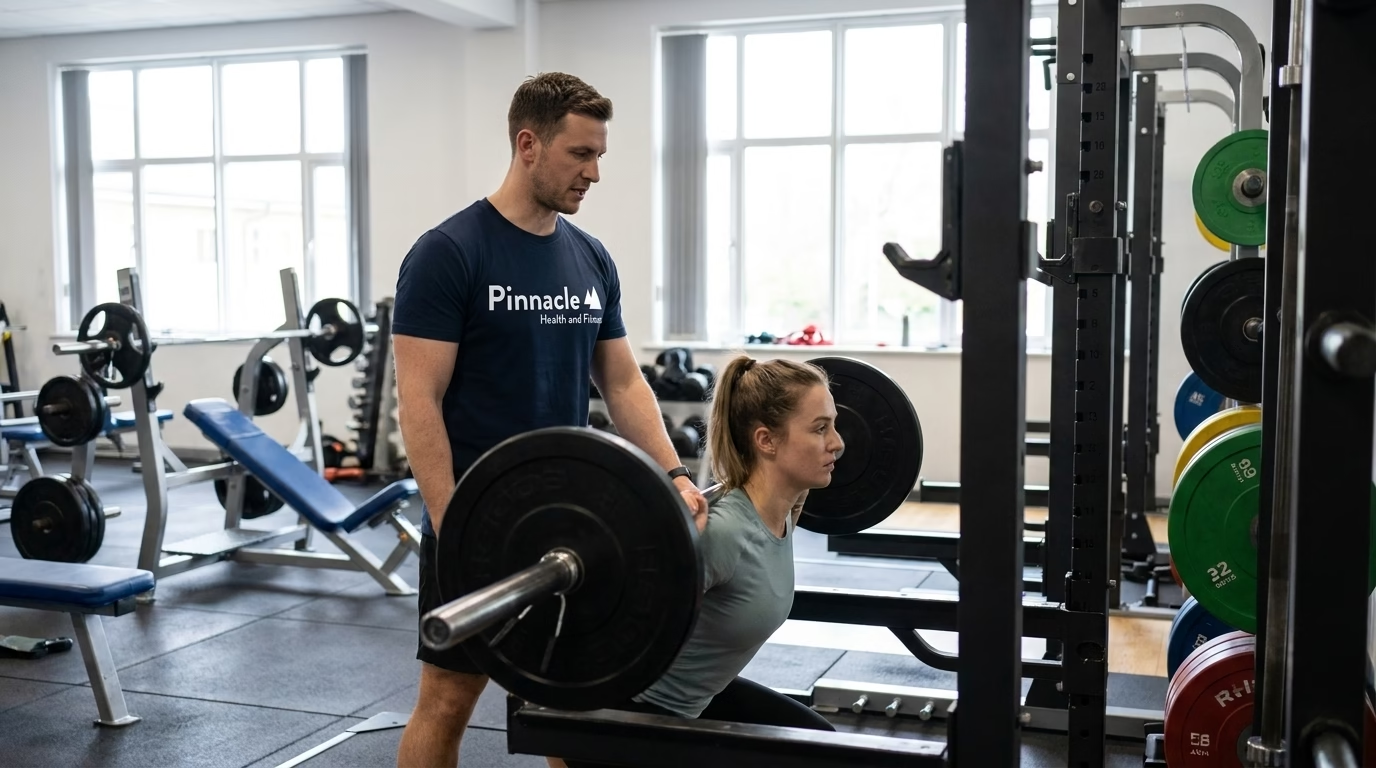
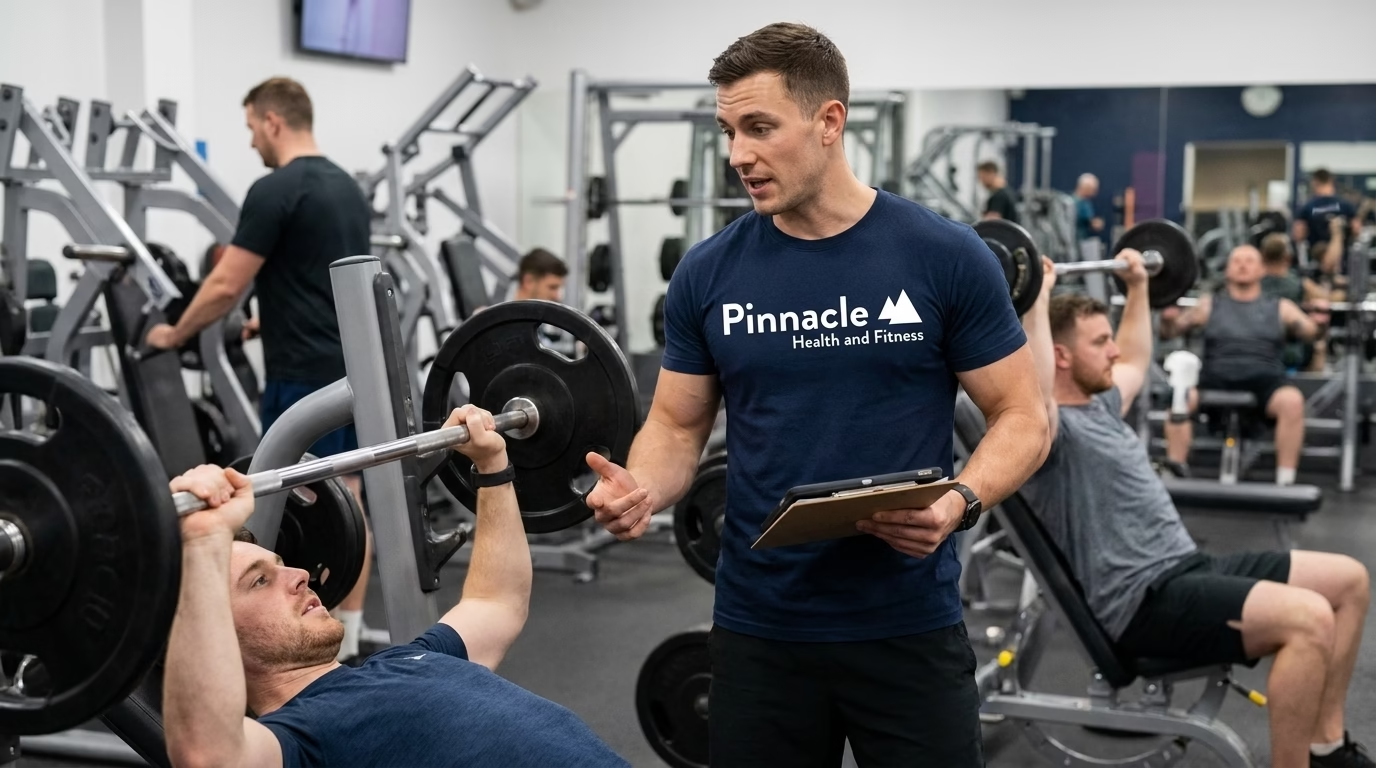
At Pinnacle Health and Fitness, this is exactly what we prepare you for—real-world coaching, real interactions, and real responsibility from day one, not just theory on paper.
We’ve guided hundreds of learners through this exact transition—and what you’ll read here is the honest version of what to expect.
Before day one: your foundation matters more than you think
Everything that happens on the gym floor is downstream of how well you’ve been prepared. This is why we take qualification seriously—not as a box to tick, but as the genuine infrastructure of a credible career.
The recognised UK pathway we take our learners through is straightforward:
- Level 2 Gym Instructor – your entry point to the industry
- Level 3 Personal Trainer – the progression that unlocks client work and income growth
- Combined Level 2 + Level 3 Diploma – our accelerated route for those ready to move fast
We deliver all three through a flexible 16-week blended model—combining online learning, live webinars, and hands-on practical workshops. Most learners complete their qualification in around 16 weeks, though we build in flexibility because real life doesn’t run on a fixed timetable.
All of our qualifications are accredited by YMCA Awards and mapped to CIMSPA professional standards.
That means when you step onto the gym floor, you’re not second-guessing yourself—you’re working from a standard that clients and employers already trust.
Days 1–30: getting comfortable in the environment
Your first month is an adjustment period—and we want to be clear about what that means. Being qualified and feeling confident are two different things, and the gap between them is completely normal— and importantly, it closes faster than you think when you stay consistent. Every instructor we’ve worked with has experienced it.
This phase is less about expertise and more about presence. Showing up. Being approachable. Learning how the environment actually operates rather than how you imagined it would.
What you’ll be doing
- Learning how your gym operates day-to-day
- Supporting members on the gym floor
- Demonstrating exercises and correcting form
- Observing how experienced trainers engage clients
What you might feel
- Feeling slightly overwhelmed in week one
- Uncertainty when approaching new clients
- Worrying about giving the wrong advice
- Comparing your progress to others around you
Both columns are normal. What matters most in this phase is that you stay present and resist the urge to retreat. The confidence you’re looking for isn’t something that arrives before you start engaging—it develops because you do.
Days 30–60: finding your rhythm
Somewhere around week five or six, something shifts. You stop second-guessing every interaction. You start recognising familiar faces. Conversations feel less rehearsed.
This is the phase where your Level 3 knowledge stops being theoretical and starts becoming instinctive. The patterns become visible: clients who want weight loss, those chasing strength, and—more often than you’d expect—people who simply want someone consistent to show up for them.
30–60 Days
Three things we want you to focus on
Communication over knowledge
Your ability to explain, motivate, and connect with people matters more than encyclopaedic fitness knowledge. We build this into our practical workshops—but the gym floor is where it becomes real.
Take more initiative
Approach members. Offer help before it’s requested. The instructors who build strong client bases earliest are almost always the ones who were first to step forward.
Notice what clients actually need
Not what they say they want in week one—what they’re really after. This is the beginning of real coaching, and it starts here.
Days 60–90: stepping into a professional identity
By this point, you’re no longer “new.” You’re a recognised part of the environment—and this is where your career genuinely begins.
The shift is subtle but significant. You’re not just responding to what’s in front of you; you’re starting to think ahead. To plan. To guide people through programmes rather than single sessions. This is the move from gym instructor to personal trainer, and it happens faster than most people expect.
60–90 Days
What changes in this phase
Thinking like a PT
You start thinking like a personal trainer. Analysing movement, identifying patterns, and programming with a goal in mind rather than reacting to the session in front of you.
Building a client base
You begin building a client base. It doesn’t happen overnight, but it starts here. Remembering names, following up, and offering consistent support that gives people a reason to stay.
Developing your coaching style
High-energy and motivational, or calm and structured—there’s no right answer. The trainers who succeed long-term are those who lean into what’s authentically theirs.
The honest part: what no one else tells you
Your first 90 days will contain genuine progress—and genuine doubt. Both are real, and both are temporary.
Every successful trainer you see in your gym today went through this exact stage. The difference between those who built a career and those who didn’t is rarely talent—it’s consistency.
The questions that surface in this period tend to follow a pattern: “Am I good enough?” “Why don’t I have clients yet?” “Is this actually going to work?” We hear them from almost every learner we support through this transition. They’re a sign that you’re taking your career seriously—not that you’re falling behind.
What we encourage: stay close to your goals, be honest about what’s working and what isn’t, and remember that the foundation you’re building now is what everything else will stand on.
Common mistakes we see in the first 90 days
We’ve been close to enough early-career instructors to know the patterns. These aren’t character flaws—they’re tendencies, and knowing them in advance is half the work.
What to Avoid
Common mistakes in this phase of your journey
Trying to be perfect before engaging
You won’t know everything in month one—and clients don’t expect you to. What they respond to is confidence, consistency, and genuine care. Focus on those three things first.
Avoiding conversations
The growth you need in this phase comes almost entirely from human interaction. Every conversation you avoid is a trust relationship that doesn’t start. Lean into the discomfort early—it diminishes quickly.
Measuring yourself against others
The trainer next to you may be in month 18 of their career, not month one. Your trajectory is your own. Comparing your beginning to someone else’s middle is the fastest route to unnecessary discouragement.
Treating this phase as purely temporary
The habits you build now—how you communicate, how you show up, how you treat your first clients—become the habits you carry for your entire career. This phase matters for reasons beyond just getting through it.
Building the bigger picture: your career beyond 90 days
Your first 90 days are a beginning, not a ceiling. At Pinnacle, we structure our pathways to support every stage that follows—because the trainers we’re most proud of are the ones who keep developing long after they’ve qualified.
Career Pathway
Your progression from start to professional PT
Start
Explore the industry
Qualify
Level 2 & Level 3
Progress
Gym floor to PT
Specialise
Build your niche
Build a Client Base
Grow and sustain your client base
Once you’ve established yourself, the next stages become available. We’re expanding our provision into strength & conditioning and applied nutrition—meaning the learners we bring through now will be among the first to access those pathways as they open.
Your development with us doesn’t end at qualification; it’s designed to support you through each stage of your career—from your first session to building a consistent client base.
Questions we’re asked most often
Honestly—more challenging than some people expect, and smoother than others fear. The adjustment is real, but most instructors find their footing within the first few weeks. The key is staying consistent through the uncertainty rather than waiting for it to pass before engaging fully.
It varies more than people realise, and it’s rarely determined by ability alone. The instructors who build a client base fastest are almost always the ones who are most present, most approachable, and most consistent. Some begin within the first month; others take a little longer. Both are normal.
If your goal is to work as a personal trainer—with the client relationships, the programming depth, and the income potential that comes with it—then yes, Level 3 is essential. It’s the recognised standard for PT practice in the UK, and the threshold most quality facilities and platforms require.
Communication, consistency, and the ability to make people feel genuinely supported. Technical knowledge is the foundation, but the instructors who build lasting careers are those who can translate that knowledge into something their clients actually feel and respond to.
Be reliably present. Remember names. Follow up. Show that you’re invested in the people you work with, not just the sessions you deliver. Trust is built through accumulated small actions—and it’s the only real source of a sustainable client base.
Your first step matters more than you think.
but to confidently step onto the gym floor, build real client relationships, and succeed in your first 90 days and far beyond.
Level 2 Gym Instructor · Level 3 Personal Trainer · Combined Diploma
pinnaclehealthfitness.co.uk · YMCA Awards Accredited · CIMSPA Aligned